One of my pleasures in life—one that combines in a strategic way my humanistic impulses with my unbecoming “Told ya so!” competitiveness—is proving to people that they will in fact enjoy foods they now despise, so long as they have them my way.
 Dark greens like kale and collards are prime catalysts for achieving this conflation of the altruistic and the vain, but so are peas, an early treat from the year’s bounty.
Most of us know peas as at best little green balls filling up a freezer bag best used as an ice pack and at worst mushy gray globs taking up plate space next to the mashed potatoes. This is a travesty.









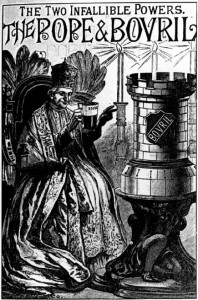 In 1870, Napoleon III was waging war on the Prussians, and he needed one million tins of beef to feed his troops. A Scotsman named Johnson landed the gig and concocted Bovril, a concentrated beef paste that can be spread on crackers, eaten with a spoon, whathaveyou. Its most popular incarnation became, and remains, mixed into hot water. Napoleon died and Prussia disappeared, but instant beef soup marched on. Apparently, generations of soccer fans and sufferers of the common cold have soldiered through their bludgeoning English winters on the strength of Bovril. Pope Leo XIII even stumped for it with the ad slogan: The Two Infallible Powers – The Pope & Bovril.